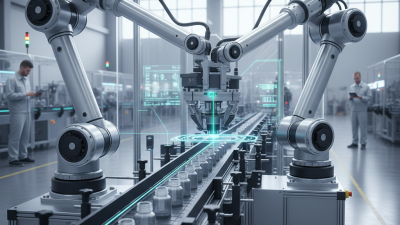
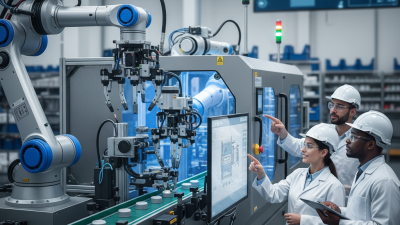
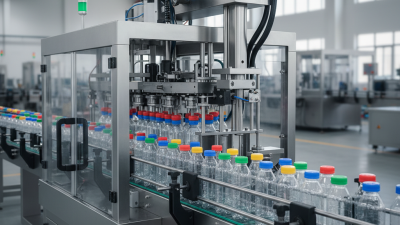
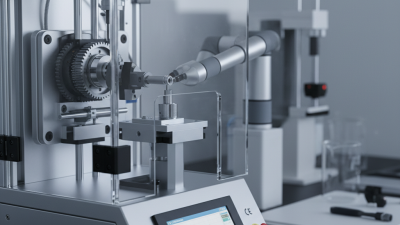
In today’s fast-moving manufacturing world, picking the right supplier for high-quality automated assembly machines is more important than ever. A good partner can really make a difference, keeping your production line running smoothly and accurately. One popular choice is the Rotary Automated Assembly Machine. It’s well-known for being fast and versatile, which many folks find pretty appealing.
Of course, when you’re selecting a supplier, it’s not just about pricing. You should also look into their certifications—especially the CE mark. That’s basically a guarantee that the machinery complies with European safety standards. A supplier with proper certifications shows they care about quality and reliability, no question.
That said, finding the perfect partner isn’t always a breeze. Some suppliers might make big promises about service but fall short when it’s time to deliver. Others might not be that responsive or easy to work with. Doing your homework—like asking for references or checking reviews—can really save you headaches down the line. In the end, putting some effort into choosing the right automated assembly machine supplier really pays off — you'll see better productivity and less downtime overall.
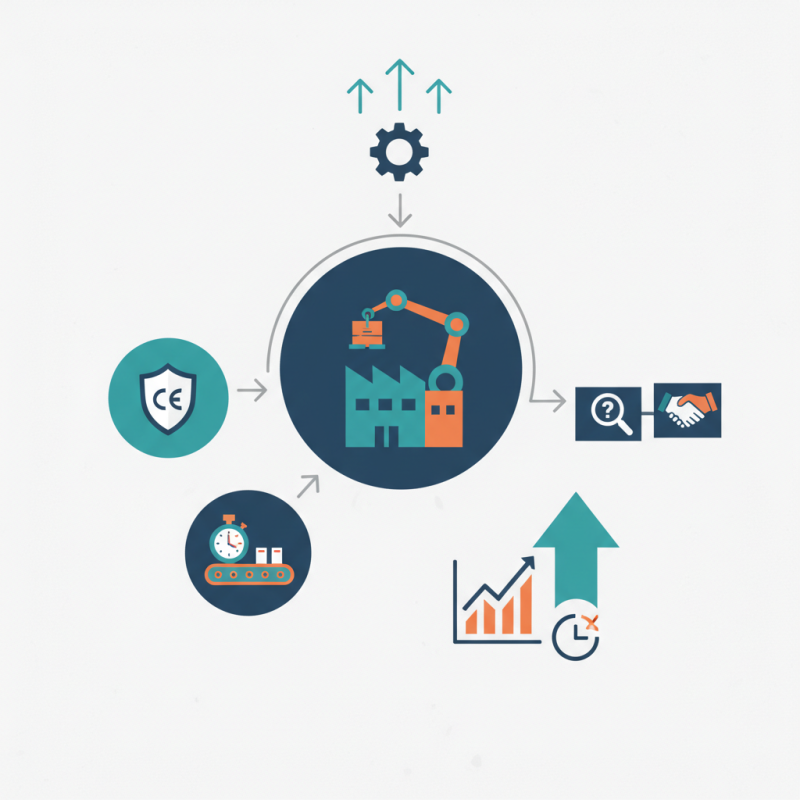
The Importance of CE Certification in Automated Assembly Machines
CE certification is crucial for ensuring the safety and efficiency of Industrial Automated Assembly Machines. According to a recent industry report, nearly 85% of manufacturers prioritize CE compliance when selecting equipment suppliers. This certification indicates that a machine meets European safety standards, minimizing risks of accidents in the workplace. Machines without certification can lead to costly downtime or injuries, impacting productivity significantly.
In the competitive manufacturing sector, choosing a high-quality supplier can affect operational success. Data shows that certified machines generally have a longer lifespan and lower maintenance costs. Companies reported that about 30% of non-certified equipment required unexpected repairs within the first year. Relying on equipment lacking CE certification is a gamble that many businesses can ill afford.
Another aspect to consider is the evolving regulatory landscape. Manufacturers must adapt to new safety standards continuously. The absence of CE certification may not only affect safety but can also limit market access in Europe. Many firms have realized too late that non-compliance leads to reputational damage and lost opportunities. The path forward requires careful selection of a CE-certified supplier, ensuring that industrial automated assembly machines are reliable and compliant with current regulations.
Key Features of High-Quality Automated Assembly Machines
Automated assembly machines are crucial for modern manufacturing. High-quality machines can significantly enhance efficiency. According to a report by MarketsandMarkets, the automated assembly market is projected to reach $20 billion by 2026. This growth reflects the increasing need for precision and speed in manufacturing.
Key features of high-quality automated assembly machines include advanced robotics and intelligent software. These machines often use AI to improve accuracy. For example, some can reduce error rates to below 0.1%. The integration of sensors allows for real-time monitoring, which can identify potential issues before they escalate. However, not all machines meet these standards. Some may fall prey to outdated technology or subpar components.
Flexibility is another vital characteristic. High-quality machines can adapt to various product types without extensive reconfiguration. This adaptability can cut setup times by 30% or more. Yet, some users find that their machines lack this capability, leading to production bottlenecks. It's essential to assess whether a supplier can provide the necessary customization options.
Criteria for Evaluating CE Certification Suppliers
When selecting a high-quality CE certification automated assembly machine supplier, several criteria should be considered. The supplier's track record is crucial. Look for companies with proven experience in the industry. A recent report highlighted that 75% of manufacturing defects originate from poorly chosen suppliers. Quality assurance processes are vital. Suppliers should maintain rigorous testing and inspection protocols to ensure compliance with CE standards.
Tips: Check for recent certifications. A reliable supplier often updates its certifications. Transparency in operations shows accountability.
Another key aspect is technical support. A solid supplier offers continuous assistance post-purchase. Without adequate support, machine downtime can severely impact production. In fact, studies indicate that unplanned downtime costs manufacturers approximately 20% of their productivity. Understand their response times. You should expect prompt assistance when issues arise.
Tips: Ask for customer testimonials. Real feedback can guide your decision-making.
Lastly, evaluate the adaptability of the high-speed automated assembly line. The availability of custom features is essential for meeting specific production needs. As market demands change, the ability to adjust machinery can provide a competitive edge. Consider future scalability during your evaluation process.
Why Choose a High-Quality CE Certification Automated Assembly Machine Supplier? - Criteria for Evaluating CE Certification Suppliers
| Criteria |
Description |
Importance Level |
| Certification Validity |
Ensure the supplier has valid CE certification from recognized bodies. |
High |
| Quality Assurance |
Check for quality management systems, like ISO 9001. |
High |
| Technical Support |
Supplier should offer comprehensive technical support and training. |
Medium |
| Production Capacity |
Assess if the supplier can meet your production demands. |
Medium |
| Customer Reviews |
Look for testimonials and reviews from previous clients. |
Medium |
| Pricing Structure |
Evaluate pricing against your budget while considering quality. |
Low |
| Lead Time |
Understand the lead time for delivery and installation. |
Medium |
Benefits of Choosing a Reliable Supplier for Automated Machines
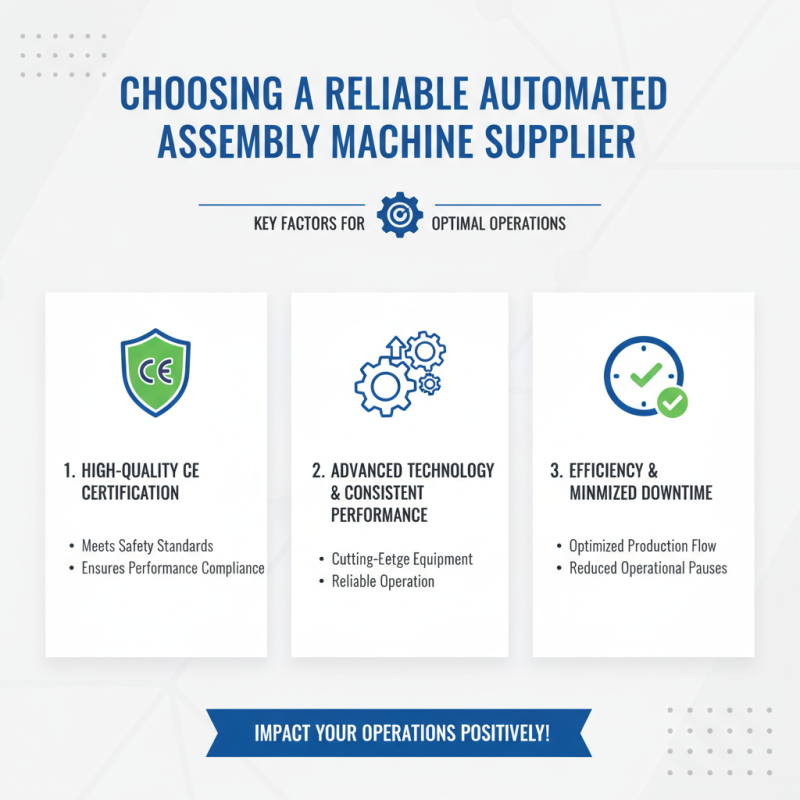
Choosing a reliable supplier for automated assembly machines can significantly impact your operations. High-quality CE certification indicates that the machines meet essential safety and performance standards. A trustworthy supplier not only provides advanced technology but also ensures consistent performance. It is vital to have equipment that operates efficiently and minimizes downtime.
A reliable supplier offers robust support and maintenance services. Issues with machinery can arise unexpectedly. When they do, having a partner who responds quickly and effectively can save time and money. A good supplier understands your industry and can provide tailored solutions. However, not every supplier will meet these standards. Researching potential partners is crucial. Look for those with proven track records, but do not ignore customer feedback.
Ongoing communication with your supplier is essential. Regular updates about machine performance can help identify areas for improvement. Reliable suppliers often share insights and innovations that enhance your processes. Still, it is important to trust your instincts. If a supplier fails to deliver on their promises, reassess your choices. Balancing cost and quality requires careful consideration.
Impact of High-Quality Assembly Machines on Production Efficiency
In today's manufacturing landscape, high-quality assembly machines play a crucial role. They significantly impact production efficiency. According to industry reports, companies using
Precision Automated Assembly Equipment see productivity increases of up to 30%. This rise is attributed to reduced cycle times and fewer human errors. However, some firms still rely on outdated technology. They struggle with delays and higher operational costs.
High-quality assembly machines also enhance product consistency. Research shows that automation leads to a decrease in defects by nearly 50%. This reduction directly affects profitability. Yet, some businesses hesitate to adopt these innovations. They fear high upfront costs and potential disruptions to existing workflows. Addressing these concerns is vital for long-term success.
Investing in a reliable supplier for these machines is essential. A well-chosen partner ensures ongoing support and maintenance. This relationship can boost overall production capabilities. It helps manufacturers adapt to market demands quickly. Quality matters; it shapes the future of efficient production.
Comparative Analysis of CE Certified vs. Non-Certified Machines
When comparing CE certified machines to non-certified ones, quality and safety come to the forefront. CE certification signifies that a machine meets strict European standards. These machines undergo rigorous testing. They must prove their reliability and ensure user safety. Non-certified machines, on the other hand, lack this verification. They may pose risks to operators and processes. There’s a notable difference in manufacturing integrity.
CE certified machines often incorporate the latest technology. They include safety features like automatic shut-off and overload protection. These enhancements aren't always found in non-certified options, which can lead to operational failures. Users may find themselves in challenging situations due to machine malfunctions. Maintenance costs can rise too, as non-certified machines deteriorate faster. Buyers should consider long-term implications rather than short-term savings.
Furthermore, CE certification boosts marketability. Companies using certified machines can appeal to quality-conscious clients. Those using non-certified machines may struggle to gain trust. This can impact their reputation negatively. Even if the initial investment for CE certified machines is higher, the benefits often outweigh the costs. Reflecting on these points can help businesses make informed choices for future growth.
Long-Term Cost Savings of Investing in High-Quality Equipment
Investing in high-quality equipment can lead to significant long-term savings. For instance, a report from the Industry Automation Council indicates that high-quality automated assembly machines can reduce labor costs by up to 30%. This is vital in today’s competitive market, where every penny counts. When you opt for a reliable Automated Assembly Solution Provider, you are often choosing durability over frequent replacements. The initial investment may seem steep, but it can yield enormous savings in the long run.
Moreover, high-quality machines tend to offer better efficiency and speed. According to a recent survey, businesses that upgraded to advanced automated systems saw a productivity increase of about 25%. Such improvements can dramatically enhance output and accelerate return on investment. However, it’s also essential to consider maintenance costs. Occasionally, even the best machines can require repairs. Companies must be prepared for these unexpected expenses.
Quality equipment often requires fewer resources to operate. This may lead to reduced energy consumption and lower operational costs. Yet, finding the right Automated Assembly Solution Provider can be challenging. Some suppliers offer attractive pricing but skimp on quality and support. Making an informed choice is critical to avoid future regrets, especially when long-term savings are the goal. Investing wisely today can pave the way for financial health tomorrow.
Long-Term Cost Savings of Investing in High-Quality Equipment
Enhancing Production Efficiency with the Three-Piece Spray Pump Gasket Automatic Assembly Machine
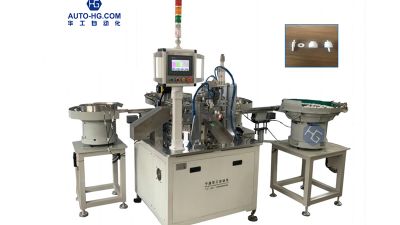
In the highly competitive spray pump manufacturing industry, enhancing production efficiency is paramount. The introduction of fully automated rotary pneumatic machines specifically designed for the assembly of three-piece spray pump gaskets represents a significant leap forward in operational capabilities. With the ability to assemble three critical components—the piston, screw ring, and gasket—at an impressive speed of 60 to 80 assemblies per minute, these machines are transforming mid-stage assembly processes.
One of the standout features of this advanced assembly technology is its automatic detection system, which ensures that each component is present before assembly is completed. This not only minimizes the risk of human error but also guarantees that any defective assemblies are identified and rejected instantly. By maintaining strict quality control, manufacturers can avoid costly downstream issues often associated with missing or improperly assembled components. According to industry reports, automation in assembly lines can increase production efficiency by up to 30%, underscoring the impact of such machines on overall manufacturing productivity.
By prioritizing accuracy and reliability, these automatic assembly machines contribute to a robust supply chain management process. The integration of automation in the assembly of spray pump components is not just a trend; it reflects a fundamental shift towards more efficient and sustainable manufacturing practices, aligning with broader industry goals of reducing waste and enhancing quality. As companies increasingly adopt these technologies, they position themselves to meet growing market demands while ensuring that operational excellence is achieved.
FAQS
: The article aims to inform readers about specific topics and provide insights.
The content is designed for individuals interested in learning about the subject matter.
You can implement the suggestions in daily life or your work.
Yes, some advice may not apply universally. Personal context matters.
Regular review can help reinforce understanding and application of the concepts.
Reflect on the points made and consider alternative viewpoints.
Sharing is encouraged if it helps others gain knowledge.
Acknowledging challenges offers a realistic perspective on implementation.
Yes, questioning can lead to deeper understanding and better outcomes.
Engage with multiple sources and participate in discussions.
Conclusion
Choosing a high-quality CE certification automated assembly machine supplier is essential for ensuring efficient and reliable production processes. CE certification plays a critical role in verifying that automated assembly machines meet safety and quality standards. Key features of high-quality machines include advanced technology, durability, and ease of use, which significantly contribute to enhancing production efficiency.
When evaluating potential suppliers, it is important to consider their compliance with CE certification standards and their reputation for reliability. Investing in high-quality automated assembly machines not only ensures immediate operational benefits but also results in long-term cost savings due to reduced downtime and maintenance needs. In contrast, opting for non-certified machines can lead to increased risks and potential financial losses, thus underscoring the importance of selecting a trusted supplier.