Leave Your Message
0%

You know, the assembly system industry has really been booming lately. According to reports from Global Industry Analysts, it’s growing at roughly 7% per year, and they expect it to keep up that pace through 2025. This kind of growth just underscores how important it is to have solid practices when it comes to making these custom CE-certified assembly systems. I mean, experts like James Riley, who’s a senior engineer over at Assembly Dynamics, often say, "You can’t overlook quality in assembly systems—it's pretty much the backbone of success in this industry."

When it comes to meeting the various needs of different businesses, customized solutions are absolutely essential. Take the Cosmetic Dispensing System Assembly Machine as an example—it's a big step forward in this field. With features that are specifically designed to fit particular requirements, manufacturers need to focus on standards that guarantee reliability and efficiency. That said, designing these systems isn’t always a walk in the park. Each custom solution has to go through a ton of testing to make sure it checks all the CE certification boxes.

But here’s the thing—things aren’t always consistent. A lot of manufacturers tend to overlook the fact that ongoing training and skill-building are super important. As technology keeps evolving, so should the knowledge and skills of the folks running these machines. It’s crucial to reflect on the industry’s challenges, see where improvements can be made, and keep pushing forward. Building a really strong assembly system takes both expertise and genuine dedication. The market’s pretty competitive, so those who stay adaptable and keep learning will definitely come out on top.

Ultimate Guide to Custom CE Certification Assembly System Manufacturer Best Practices?

Understanding CE Certification Requirements for Custom Assemblies

Understanding CE Certification requirements for custom assemblies is crucial for manufacturers aiming to market their products in Europe. The CE mark indicates compliance with EU legislation, and adherence to these standards can build consumer trust and enhance marketability. According to a recent report by the European Commission, products that meet CE standards have exhibited a 20% increase in consumer acceptance.

Custom assemblies often incorporate complex systems like the Vision Inspection Assembly System , which plays a key role in ensuring product quality. Implementing effective inspection processes can significantly reduce defects and improve overall efficiency. Surveys show that 40% of manufacturers report improved production timelines by integrating quality checks into the assembly line. Nevertheless, ongoing education on CE requirements is essential. Many manufacturers struggle to keep up with evolving standards, resulting in costly reworks or product recalls.

CE certification involves both documentation and testing phases, which may differ based on the nature of the assembly. Lack of clarity in compliance procedures can lead to serious setbacks. For instance, a study found that 30% of companies faced delays due to insufficient understanding of documentation requirements. As manufacturers embrace custom solutions, continuous learning and adaptation become vital in navigating these challenges.

Key Components of an Effective CE Certification Assembly System

Creating an effective CE certification assembly system demands a thorough understanding of key components. One vital aspect is the integration of an Automation Assembly System Integrator. These systems enhance productivity and reduce human error. Research indicates automation can increase efficiency by up to 40%, significantly impacting production timelines.

Documentation management is another critical component. Maintaining clear records of compliance is essential for successful CE certification. A study from the European Commission highlights that 30% of non-compliance issues arise from inadequate documentation practices. This can lead to costly delays. Ensuring that all steps of the assembly process are documented reduces risks and enhances accountability.

Quality assurance must not be overlooked. Regular audits and testing help identify potential failures in the assembly system. Implementing proactive measures can cut defect rates by as much as 25%. However, relying solely on automation may create blind spots. A balanced approach, incorporating manual checks, can improve overall system reliability while leveraging technological advances. Continuous evaluation is key in refining these processes.

Best Practices for Design and Development in CE Certification

In the realm of CE certification, best practices for design and development are crucial. A robust assembly system must integrate seamless collaboration between engineers, designers, and regulatory experts. Data indicates that companies with cross-functional teams experience 30% faster time-to-market. Engaging stakeholders early in the process can streamline compliance.

**Tips:** Foster open communication among all parties. Regular updates and feedback loops can significantly reduce errors.

One common challenge is ensuring that designs meet regulatory requirements without sacrificing innovation. Consider incorporating risk management frameworks early in the design process. Studies show that companies investing in risk assessment tools see up to a 40% reduction in compliance-related delays. Balancing creativity with compliance can be tough.

**Tip:** Use prototyping to identify potential issues before full production. This can save both time and resources.

Documentation also plays a vital role in CE certification. Thorough documentation helps in both design validation and future audits. Yet, many design teams overlook this key element. Surveys reveal that nearly 60% of design teams struggle with maintaining accurate records.

**Tip:** Implement organized documentation systems from the start. This proactive approach can prevent compliance headaches later.

Ultimate Guide to Custom CE Certification Assembly System Manufacturer Best Practices

Best Practice Description Importance Implementation Tips
Regulatory Knowledge Understand CE marking legislation and standards relevant to your products. Essential for compliance and market access. Attend training sessions and workshops on CE requirements.
Risk Assessment Conduct a thorough risk analysis during the design phase. Minimizes potential hazards associated with products. Use standardized risk assessment tools.
Documentation Management Maintain organized and easily accessible documentation for compliance. Critical for audits and verification processes. Implement a digital document management system.
Component Quality Control Ensure components meet quality and safety standards before assembly. Prevents failures and recalls. Work with certified suppliers to source components.
Testing and Validation Perform rigorous testing on final products to ensure compliance. Verifies that the product functions as intended. Engage certified testing laboratories.

Quality Control Measures for CE Certified Assembly Systems

Ultimate Guide to Custom CE Certification Assembly System Manufacturer Best Practices?

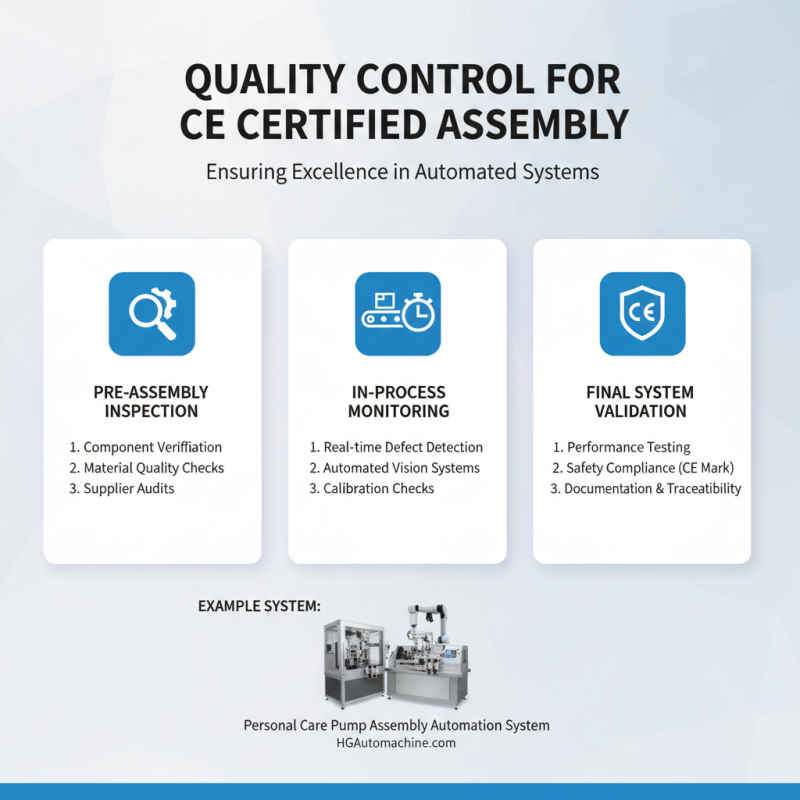
In today's competitive market, ensuring quality control in CE certified assembly systems is critical. An effective quality control framework can help manufacturers achieve high standards for products like the Personal Care Pump Assembly Automation System. Regular inspections at various stages of the assembly process can prevent defects and streamline production.

Tips for implementing quality checks involve creating a checklist that focuses on key assembly components. Regular audits can reveal underlying issues in manufacturing processes. It’s important to train staff to identify these issues early, allowing for immediate corrective action. Remember, the goal is not just to meet CE certification but also to enhance product reliability.

Another essential practice is documentation. Keeping detailed records of the assembly process, inspections, and corrections creates a reliable reference. This can serve as a guide for future projects. However, the challenge lies in maintaining consistency in these records across all teams, which can be harder than it sounds. Consistency leads to accountability, which is vital for achieving long-term success.

Compliance Testing and Documentation for CE Certification

Ultimate Guide to Custom CE Certification Assembly System Manufacturer Best Practices?

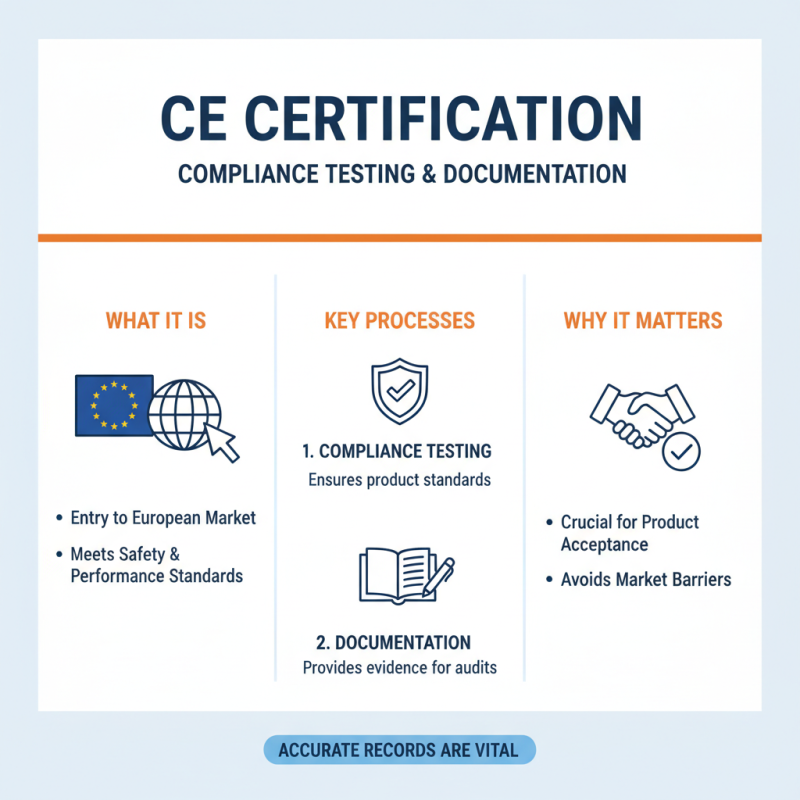
CE certification is essential for products entering the European market. Compliance testing ensures that these products meet safety and performance standards. Documentation plays a crucial role here. It provides evidence of compliance and serves as a reference for audits. Maintaining accurate and organized records is vital. This process can be challenging, but it is necessary for product acceptance.

The Packaging Assembly System must undergo rigorous testing. Various tests evaluate mechanical safety, electromagnetic compatibility, and environmental impact. Each of these tests requires detailed documentation. Not all manufacturers realize the importance of this documentation. A lack of thorough records can lead to delays, fines, or even product recalls.

Engaging experts in compliance testing can improve the process. They understand the latest regulations and can identify areas for improvement. Investing in proper documentation may seem tedious, yet it pays off. It builds trust with regulatory bodies and consumers alike. Consider revisiting your current documentation practices regularly. This reflection can highlight weaknesses and improve overall compliance.

Streamlining the Assembly Process for CE Certification Success

Streamlining the assembly process for CE certification can significantly enhance product compliance and market readiness. Industry reports show that over 70% of manufacturers face delays in establishing CE compliance due to inefficient assembly practices. The integration of thorough planning and systematic workflows can help mitigate these issues.

Effective communication among team members is crucial. Clear roles must be defined to ensure accountability. Documentation needs to be standardized to prevent errors. One study found that 45% of compliance failures stemmed from miscommunication during assembly. Utilizing checklists and visual aids can help clarify procedures and expectations throughout the process.

Continuous improvement is essential. Regular evaluations of assembly methods can detect inefficiencies. One company increased its assembly efficiency by 60% through iterative process reviews. Manufacturing professionals should embrace feedback loops. Testing prototypes prior to mass production may reveal issues early. By refining assembly practices, manufacturers can achieve better compliance outcomes and expedite CE certification.

Continuous Improvement Strategies for Custom CE Certification Systems

Continuous improvement is essential in developing effective custom CE certification systems. Organizations must regularly evaluate their processes. A study by the Quality Assurance Agency reveals that 75% of organizations fail to fully implement improvement strategies. This highlights the need for ongoing assessment and adaptation.

Implementing regular feedback loops can significantly enhance system reliability. Engaging stakeholders in the process of evaluating system performance leads to actionable insights. According to industry experts, documenting lessons learned can improve future outcomes by up to 30%. However, many companies still overlook this crucial step.

Additionally, staying abreast of regulatory changes is vital. The CE marking landscape evolves consistently, and failing to adapt can result in compliance issues. Reports indicate that 40% of businesses experienced delays due to outdated practices. Continuous training for teams ensures that they are equipped with the latest knowledge. Ignoring this aspect can jeopardize certifications and product launches.

Custom CE Certification Systems Best Practices

Market Dynamics and Innovations in Nasal Spray Pump Assembly: Analyzing Industry Trends and Growth Projections for 2023

The nasal spray pump assembly industry is undergoing significant transformations, driven by advancements in technology and evolving market demands. As we head into 2023, the focus on innovation is more pronounced than ever. New machinery designed for the final assembly of nasal spray pumps incorporates four critical components: the pump body, actuator cap, insert disc, and transparent cover. This streamlined process not only enhances efficiency but also ensures the integrity of each component through high-precision manufacturing techniques.

The latest assembly equipment integrates a series of meticulous functions, including precise pressing, accurate disc positioning, snap-locking mechanisms, and rigorous spray atomization inspections. These features are essential for verifying that each nasal spray pump meets stringent performance standards before reaching the packaging stage. The importance of reliable assembly processes cannot be overstated as they directly impact the product's effectiveness and safety for consumers. As the nasal spray market continues to expand, companies must invest in innovative assembly solutions to remain competitive and uphold quality standards.

FAQS

: What is the role of an automation assembly system integrator in CE certification?

: It improves productivity and reduces human error, boosting efficiency by up to 40%.

Why is documentation management important for CE certification?

Clear records of compliance are essential. Inadequate documentation causes 30% of non-compliance issues.

How can regular audits impact the quality assurance process?

Audits identify potential failures. Proactive measures can reduce defect rates by up to 25%.

What challenges do design teams face in CE certification?

Balancing regulatory requirements with innovation is tough. Many overlook the need for detailed documentation.

How can risk management frameworks help in design?

Incorporating them early can reduce compliance-related delays by up to 40%.

What is a common source of compliance failures during assembly?

Miscommunication during assembly leads to 45% of failures. Clear roles and standardized documentation are crucial.

What should be prioritized for effective communication in teams?

Foster open dialogue and regular updates to reduce errors significantly.

How can manufacturers increase assembly efficiency?

Regular evaluations and iterative processes can lead to a 60% increase in efficiency.

Why is prototyping beneficial before production?

It helps identify potential issues early, saving time and resources in the long run.

What approach can prevent compliance headaches in documentation?

Implementing organized documentation systems from the start is proactive and effective.

Conclusion

The "Ultimate Guide to Custom CE Certification Assembly System Manufacturer Best Practices" provides a comprehensive overview of the essential elements needed for effective CE certification of custom assembly systems. It begins with a clear understanding of CE certification requirements, highlighting the critical components that constitute a successful assembly system. The guide emphasizes the importance of best practices in design and development, ensuring that the assembly processes meet the necessary standards.

Quality control measures are detailed to maintain high standards of safety and functionality, while compliance testing and thorough documentation are outlined as crucial steps in the certification journey. Additionally, the guide discusses strategies for streamlining the assembly process, significantly contributing to overall efficiency. Lastly, continuous improvement strategies are recommended to adapt and enhance custom CE certification systems over time, ensuring they remain compliant and competitive in the market.


Sophie

Sophie

Sophie is a dedicated marketing professional at Ningbo Huagong Automation Technology Co., Ltd., a leading high-tech enterprise specializing in the integration of research and development, manufacturing, and sales. With a profound understanding of the company's innovative product range, Sophie......
Previous Top Custom High Quality Spray Pump Assembly Machine Suppliers Explained